Contents
The quote that stopped the scroll
Official Report
I, Alban Sumana Kingsford Bagbin, the Speaker of Parliament, do hereby direct that Parliament shall, notwithstanding anything to the contrary, be recalled from recess to sit on Monday, at 12 noon of the 24th, to Friday, the 28th day of August, 2026, at Parliament House, Accra, to consider urgent parliamentary business
Alban Sumana Kingsford Bagbin
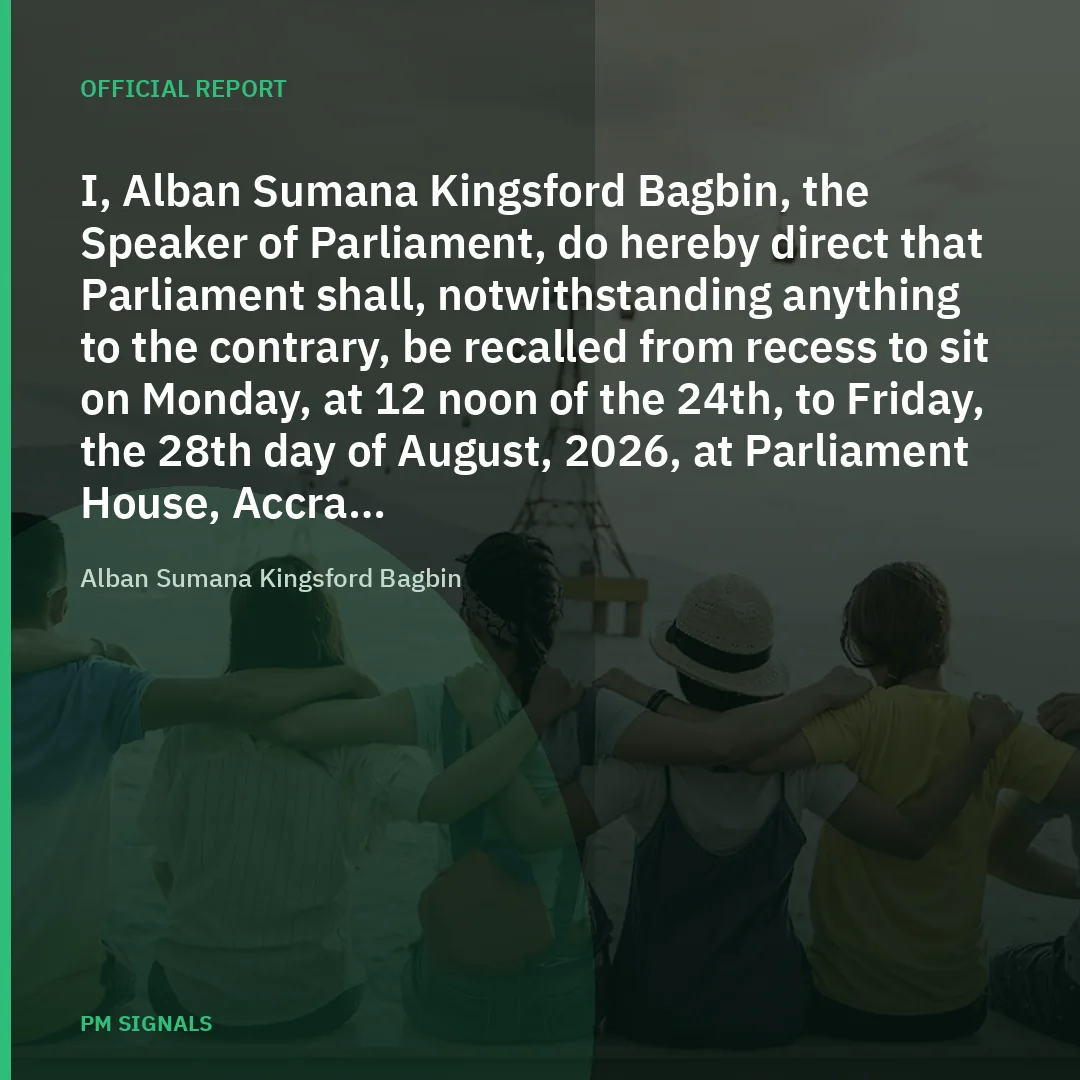
Speaker Alban Bagbin formally recalled Parliament from recess using emergency powers under Order 58(4), breaking a month-long adjournment to deal with ministerial nominations deemed too urgent to wait until the fourth quarter.
Parliament was recalled from recess less than a month after adjourning sine die on July 31, to deal with urgent business including ministerial nominations and pending motions.
What the record reveals
On August 12, Speaker Bagbin issued a formal recall notice invoking Order 58(4) of the Standing Orders, directing Parliament to reconvene from August 24-28, 2026, to consider urgent parliamentary business. This came less than a month after the House adjourned sine die on July 31, 2026.
System analysis
Parliamentary recalls show calendar and capacity constraints: session plans that cannot absorb urgent business, bottlenecks in the appointments process, and gaps between sitting periods. When the House must break recess for work that did not fit the scheduled calendar, that is an operations problem, not only a political moment.
Market gap
The record supports investigating legislative workflow: session planning tools, appointments-committee scheduling, surge capacity for urgent business, and calendar management. Whether Standing Orders and current tools give predictable capacity is not proven.
Execution blueprint
Map the frequency of emergency recalls across parliamentary sessions; analyze the types of 'urgent business' that typically trigger recalls; speak with parliamentary clerks, committee chairs, and scheduling staff about calendar bottlenecks; investigate digital workflow tools used by comparable parliaments for session planning and capacity management.

What to investigate next
The specific business completed during this recall period; whether the urgent items could have been scheduled differently; if additional recalls occur before the next scheduled session; and whether parliamentary leadership proposes Standing Orders reforms to address workflow bottlenecks.
💬 Leave a Reply
Your email address will not be published. Required fields are marked *